
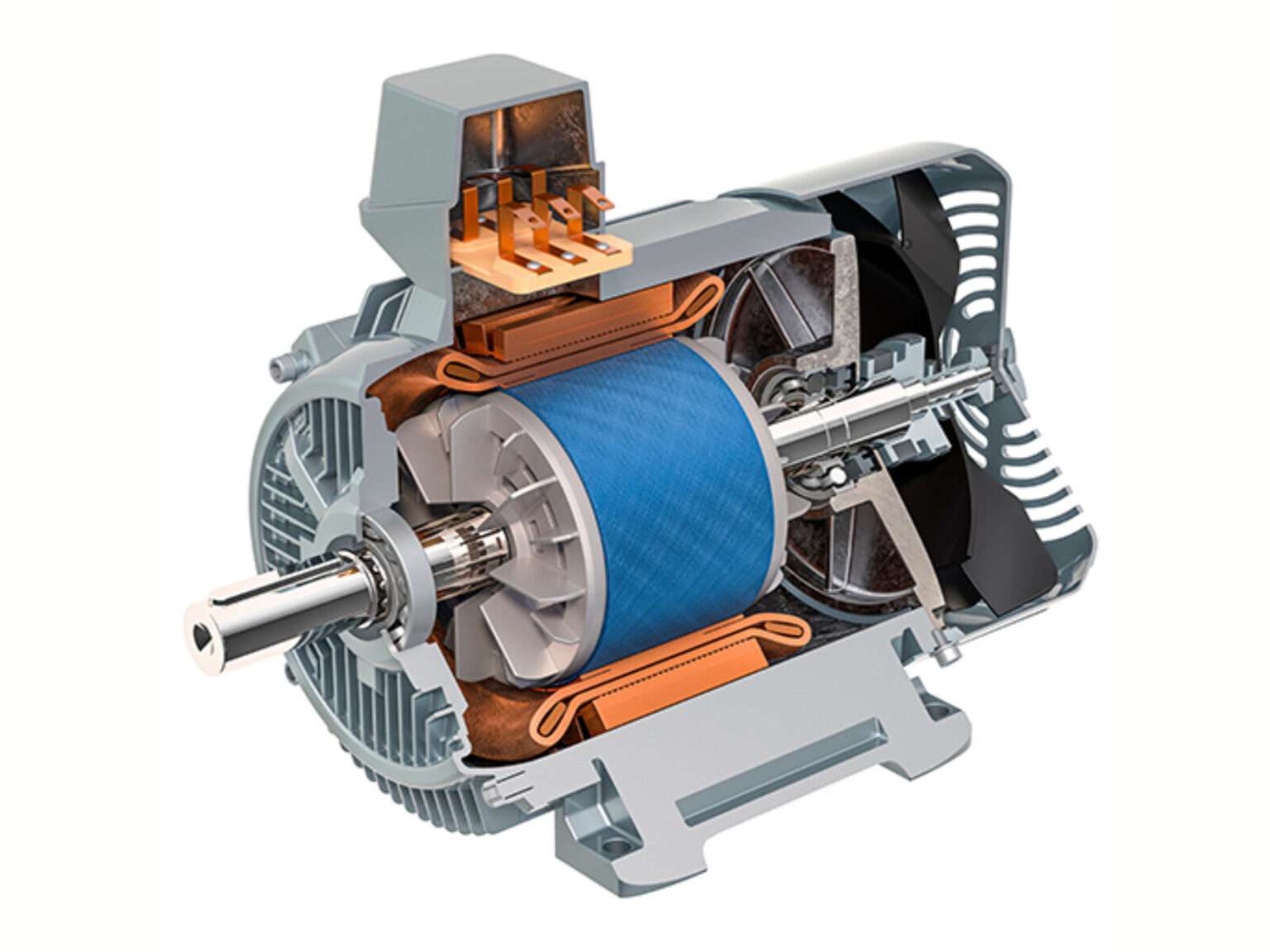
In woodturning, understanding how our lathe’s motor works is key to working safely and efficiently. The three fundamental concepts in any woodturning machine with an electric motor are motor torque, motor power and speed . Although they are often confused, they are different and complementary quantities.
In this article we will explain clearly and applied to wood, what each concept is, how they relate to each other and how they influence the selection and use of induction motors for turning.
Induction motors applied to wood lathes
Induction electric motors represent a fundamental pillar in electrical engineering and modern industry. Their ability to convert electrical energy into mechanical energy efficiently, robustly and economically makes them essential in a wide range of applications in modern workshop machinery.
The operation of these motors is based on the principle of electromagnetic induction , which allows generating electric current in the rotor without the need for direct connection to the power source. This characteristic gives them great reliability and minimal maintenance, key factors in environments where operational continuity is critical.
Motor torque in a wood lathe
Torque is the rotational force that the motor applies to the axis of rotation or main shaft of the lathe. It is measured in Newtons (force) x meters (distance), and is calculated as the applied force multiplied by the distance from the pivot point (N m).
In a wood lathe, the motor torque determines the ability of the motor to maintain its rotational force, without losing power or even stopping, in the face of external elements or situations that are applied by the operator or turner.
Practical example: If we are turning a large piece, with considerable weight, we need the motor of our lathe to provide us with a stable torque, capable of maintaining the same rotational power, to prevent the motor from overloading or having power drops, due to the friction and braking generated by the cutting tool in contact with the wood.
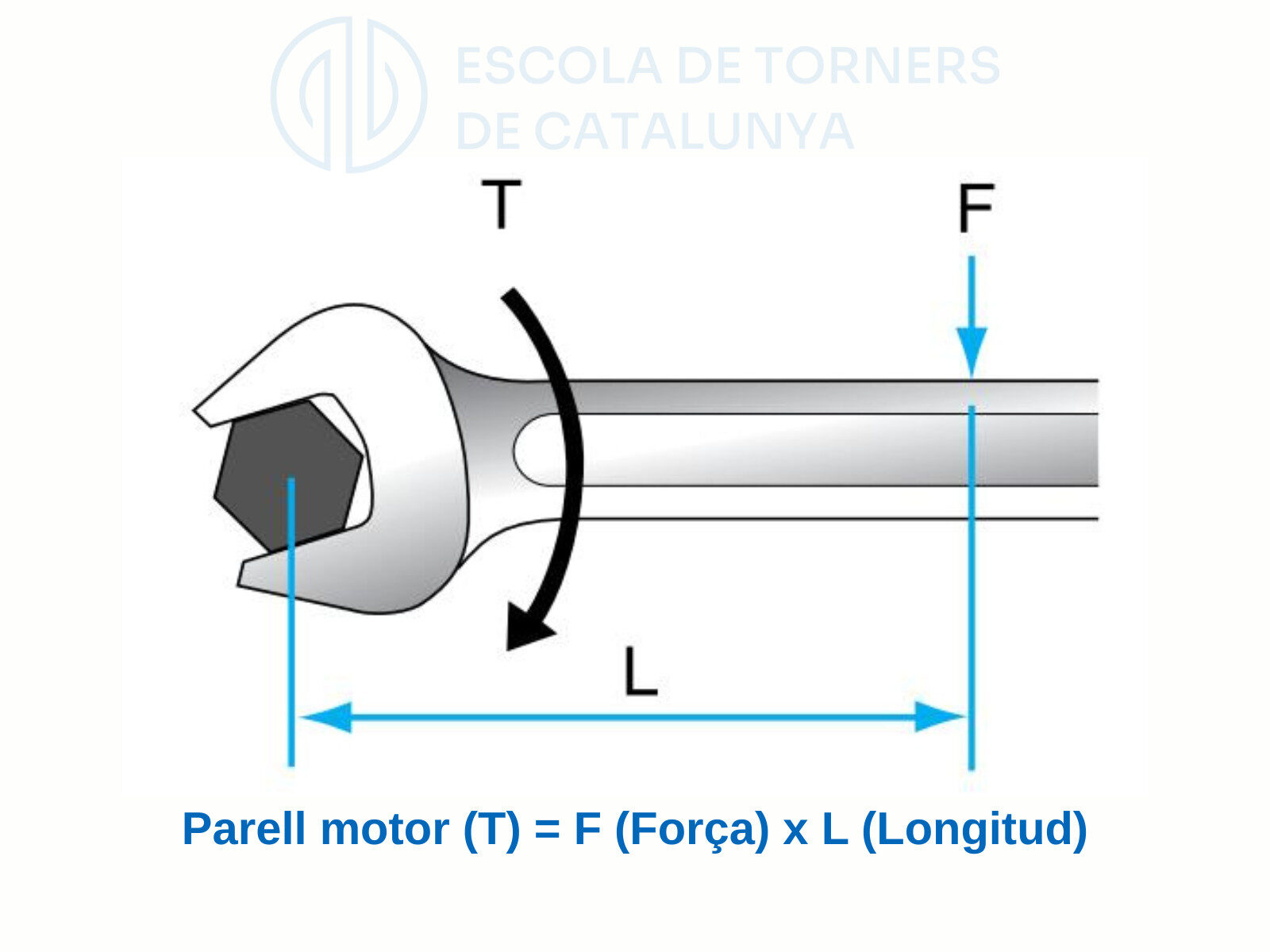
Engine power
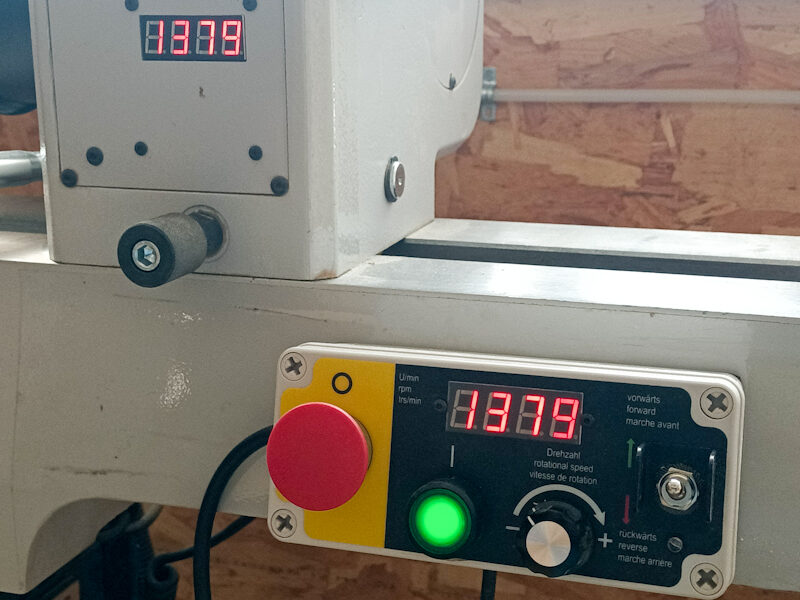
The power of a motor is the amount of work done per unit of time. In the context of electric motors , it indicates how much energy can be converted into mechanical work in a given period of time . Power is measured in watts (W) or kilowatts (KW), where 1 watt is equal to 1 joule per second.
Key: Power depends on torque and speed. This means that a motor can have a lot of torque but little power if it spins slowly, or a lot of power at high speeds with less torque.
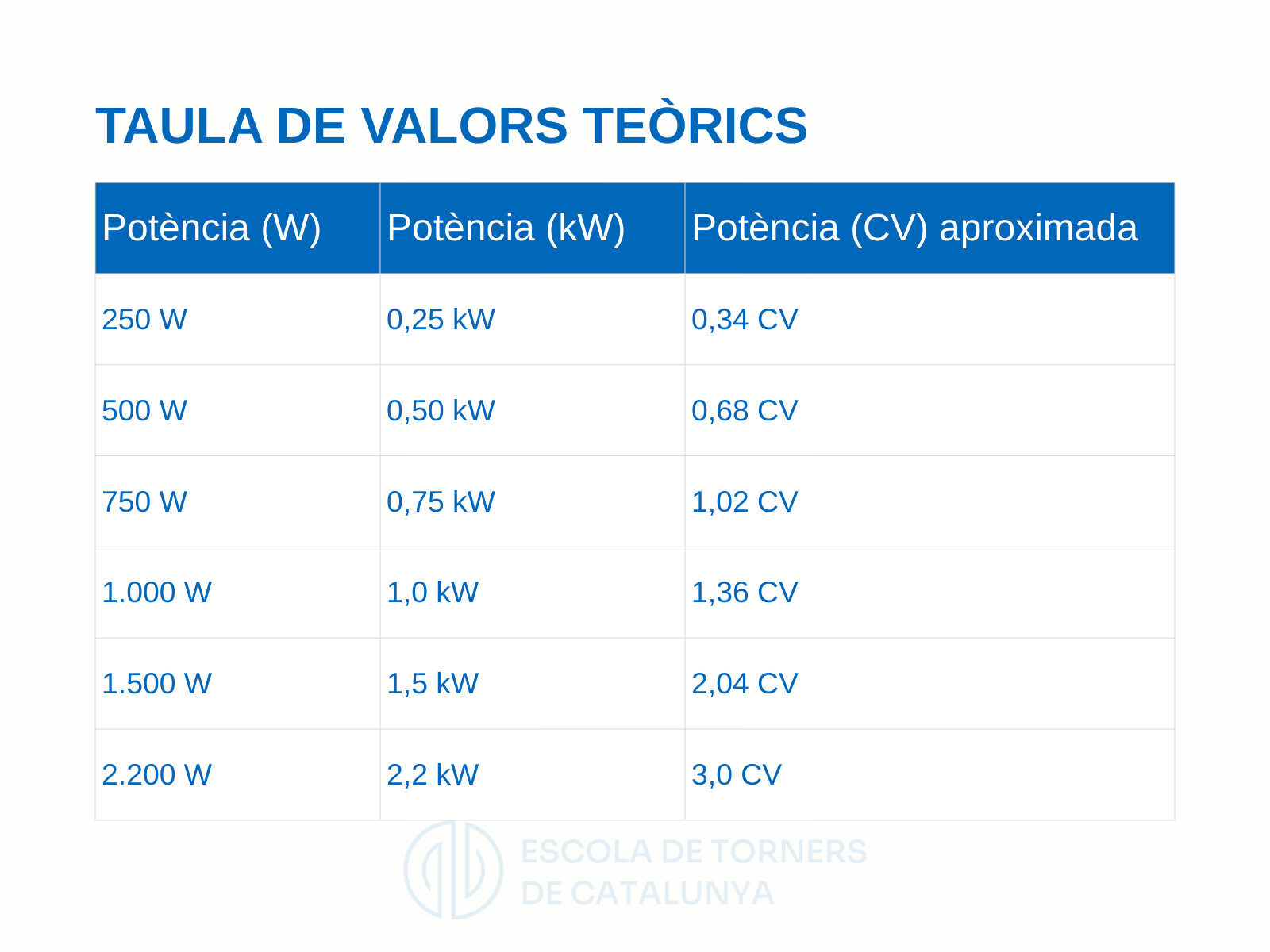
Revolutions per minute (RPM)
Revolutions per minute (rpm) are one of the most commonly used units to describe the angular velocity of a rotating element. This concept indicates how many times an object, such as a motor rotor, a shaft or a pulley, is able to complete a full revolution around its own axis in the course of one minute.
It is important to note that RPM measures rotational speed, not power. This means that an engine that spins at a high RPM does not necessarily develop more power, as this also depends on torque and other mechanical factors.
Comparison of motor torque-speed and power in induction motors:
In induction motors, the relationship between torque and rotational speed is essential to understanding the motor’s behavior under different operating conditions. This comparison allows us to analyze not only the motor’s ability to initiate movement, but also how it behaves in its normal working area and what are the limits of force it can develop.
Starting torque: Also known as starting torque, it is the force that the motor is able to apply when it begins to rotate from rest. This characteristic is key in applications where initial resistance must be overcome, such as moving heavy loads. Sufficient starting torque ensures that the motor can initiate movement without stalling or overexerting itself.
Maximum torque (break): This represents the point at which the motor can no longer increase its torque. It is the maximum limit of the torque it can generate before it begins to decrease significantly. This value is important for designing processes that do not overload the motor and for understanding how much load can be demanded without causing mechanical failure.
Nominal zone: This is the typical operating speed range of the motor, where the torque and power established by the manufacturer are offered. In this zone, the motor operates efficiently and safely, providing constant and controllable performance. Knowing this zone is essential to optimize energy consumption, maintain motor durability and ensure the quality of the work performed, whether in industrial processes or in domestic applications.
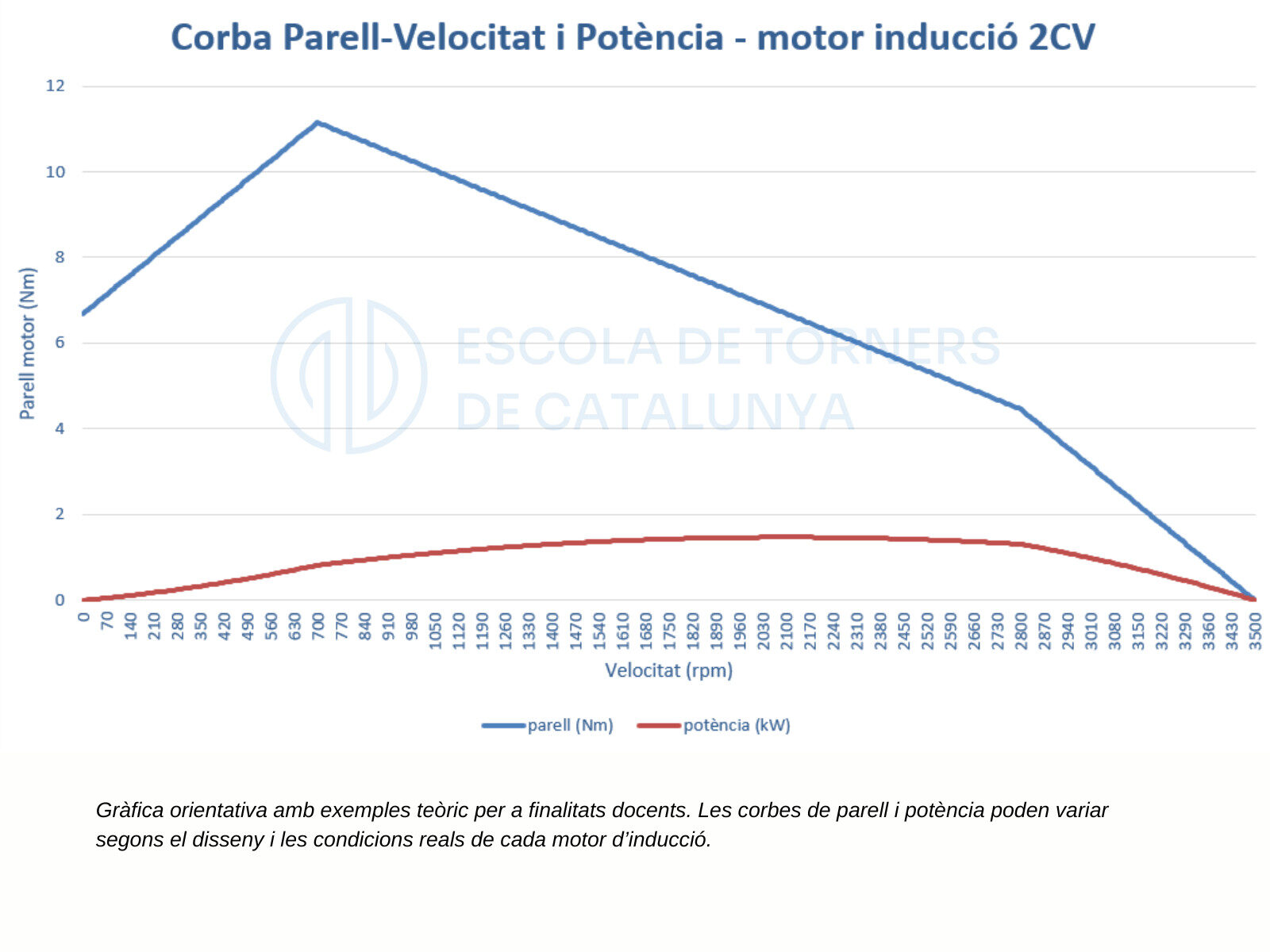
Overall, analyzing the relationship between torque, speed, and power allows induction motors to be selected and used more effectively, ensuring that they meet load and speed requirements safely and efficiently.
Practical example: wood lathe with induction motor
- Turning of large parts: Need for high torque at low speeds.
- Turning small parts and fine finishes: High-speed power is key to maintaining fast and precise production.
Operating principles of frequency converters in induction motors
Variable frequency drives (VFDs) are devices that allow the speed of induction motors to be controlled precisely. In lathes, this offers an important advantage: the behavior of the motor can be adapted to each type of wood or machining operation to be performed.
By adjusting the final rotation speed delivery, the VFD helps optimize the compromise between torque and power . For example, at lower speeds the motor can generate more torque, making it easier to work with heavy wood or large pieces, without generating any type of overload on the mechanical components.
In addition, the use of VFD contributes to saving energy and reducing wear on the motor and mechanical components , as it avoids sudden starts or stops with oscillations, and adjusts the operation of the motor to the real needs of each operation. This means greater control over the work machinery and an increase in efficiency and productivity.
FAQ’s – Induction motors applied to wood turning
What is the difference between torque and horsepower in a wood lathe motor?
Torque is the force that makes the part rotate, while power is the engine’s ability to maintain this rotation at certain working conditions and speeds.
Which induction motor is best for wood turning?
It depends on the type of pieces: to work on large and heavy wooden pieces, you will need a motor that offers a lot of torque at low speeds. On the other hand, if we want to work with small and highly finished pieces, we will need a motor that offers the most power at high speeds.
How much power should the motor of a wood lathe have?
As explained above, this will always depend on the type of work we want to do with it. Therefore, before buying any wood lathe, it is very important to know for sure what work or jobs it will have to perform.
Would you like to put all this knowledge into practice and learn new ones? The Level 1 Turning Course offers you the possibility of coming into direct contact with the lathe, wood and work tools. Enter the world of turning and live the experience of creating with wood. You can’t miss it!