
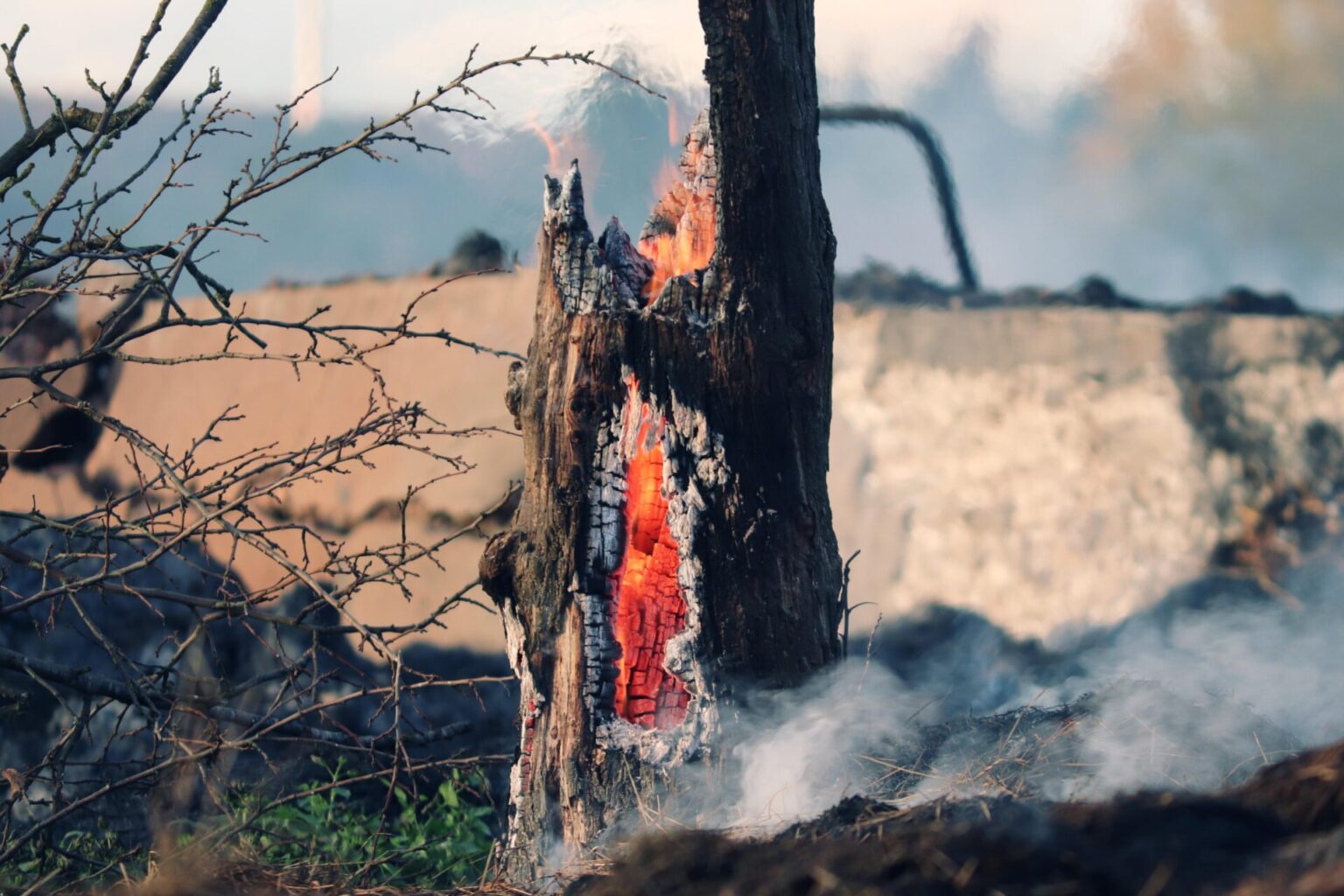
All wood has a story that begins long before it is worked on the lathe. Before becoming a bowl, a lamp or any wooden component, it has been part of a living forest ecosystem. For decades — and often for more than a century — it has grown under the influence of climate, soil, water and the biodiversity that surrounds it. Therefore, understanding what happens in a forest also means understanding the origin of our raw material. Woodturning is not only about mastering an artisanal technique; it also involves understanding the material we work with and respecting the natural environment from which it comes.
Forest fires and their effects are now one of the main environmental challenges facing Mediterranean ecosystems. Every summer we see large areas of land burned, but fire does not simply mean the loss of trees. A fire alters the soil, affects the microclimate, impacts wildlife, changes air quality and initiates a regeneration process that can last for decades.
Mediterranean forests have evolved alongside fire for thousands of years. Species such as the Aleppo pine (Pinus halepensis), holm oak (Quercus ilex) and many plants and shrubs have adaptations that allow them to recover after a fire. However, rising temperatures, prolonged droughts and the accumulation of vegetation fuel resulting from the abandonment of many forest areas are causing large forest fires that are increasingly intense and difficult to control.
In this article we will look at the main causes of forest fires, how fire spreads, the role played by wind, the environmental and climatic effects of a burned forest, and how the forest regeneration process develops.